Guide
Sheer vs Blackout vs Layered Curtains: Which Do You Need?
How sheer, blackout and layered curtains differ on light, privacy and heat, and which suits each room in a Dubai home.
6 min read
Quick answer
Choose sheer curtains if you want daylight, softer glare and daytime privacy without darkening the room. Choose blackout curtains if you need a properly dark room for sleep or screens. Choose layered curtains, a sheer and a blackout on a double track, if one room needs both. In Dubai bedrooms and sun-facing lounges, layered is the most common choice.
Almost every curtain decision in a Dubai home comes down to one question: how much light do you want in this room, and when? Sheer, blackout and layered curtains answer it in three different ways, and picking the wrong one is the most common reason people end up replacing curtains a year later.
This guide explains what each option does, where each works best, and how to decide room by room. There is a side-by-side table below if you want the short version.
What is the difference between sheer, blackout and layered curtains?
Sheer curtains filter light, blackout curtains block it, and layered curtains give you both on one window. A sheer is a light, translucent fabric such as voile or a fine linen weave. A blackout curtain has a dense lining or coating that stops light passing through. A layered setup hangs a sheer on the window side and a blackout on the room side, each on its own run of a double track.
The fabric is only half the story. How the curtain is hung, how far the track extends past the window and how close the hem comes to the floor all change how each option performs in practice.
| Sheer | Blackout | Layered | |
|---|---|---|---|
| Daylight | Soft, filtered light | Room goes dark | Your choice, any time |
| Daytime privacy | Good, room stays bright | Full, but room dark | Good, room stays bright |
| Night-time privacy | Limited with lights on | Full | Full |
| Glare and sun heat | Reduces glare | Blocks direct sun | Both, as needed |
| Track | Single | Single | Double |
| Suits | Living and dining rooms | Bedrooms, media rooms | Bedrooms, sunny lounges |
When should you choose sheer curtains?
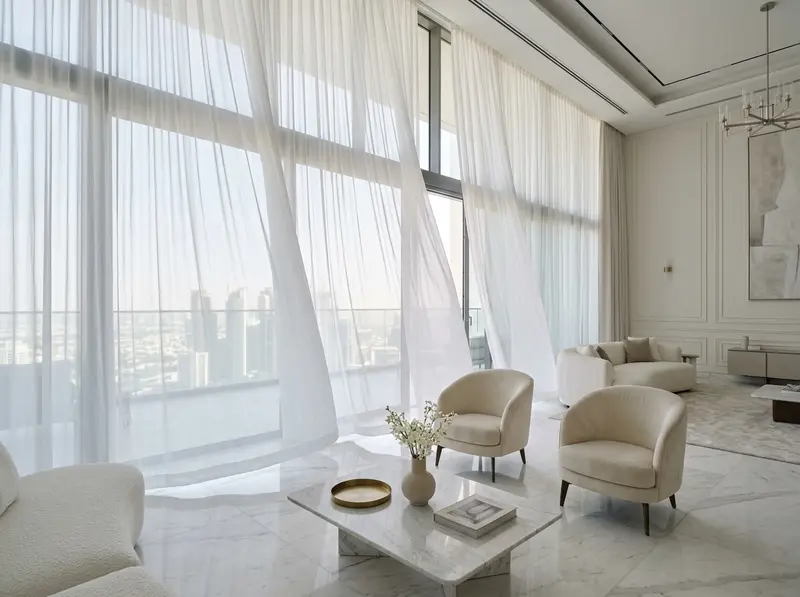
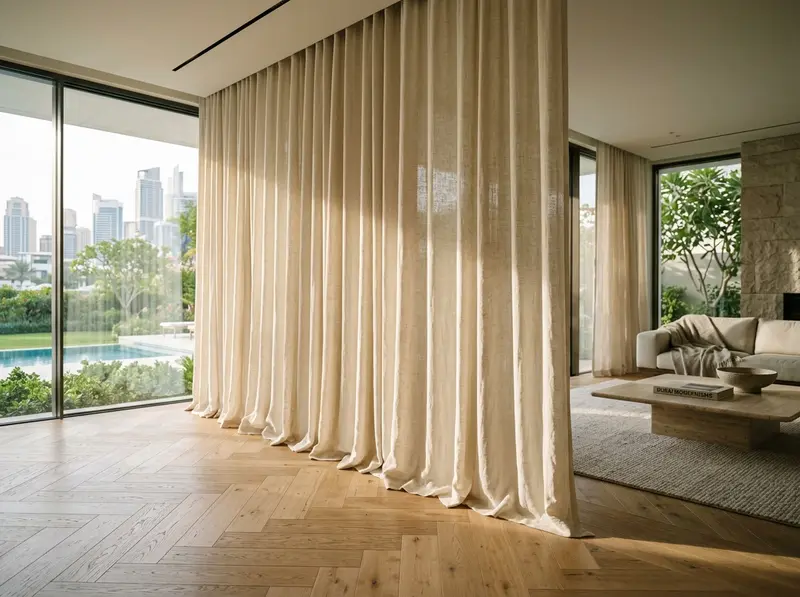
Choose sheer curtains when you want to keep a room bright while cutting glare and screening it from outside. They suit living rooms, dining areas and kitchens, where you rarely need darkness but often want to soften the sun and stop passers-by or neighbouring towers looking straight in.
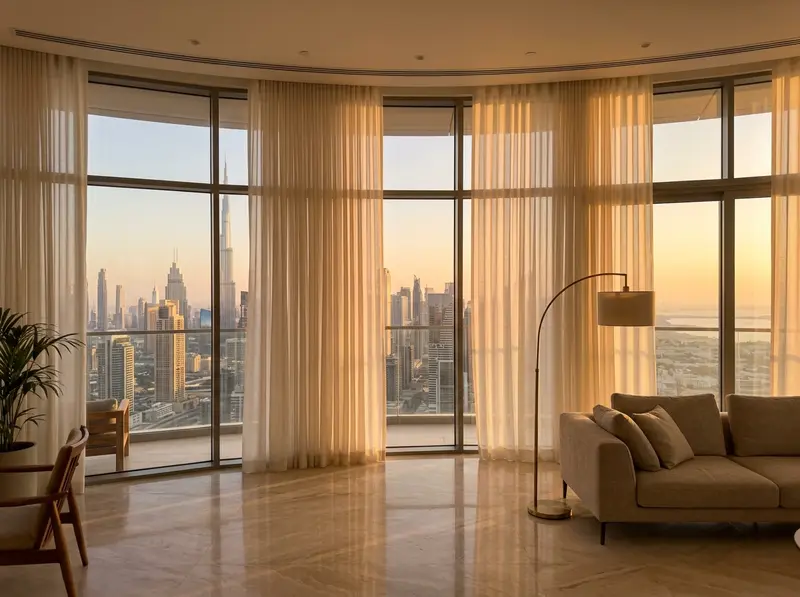
Sheers are also the curtain you can leave closed all day. In a Dubai apartment with a wall of glass, that means the view stays visible as a soft outline, the floor and furniture take less direct sun, and the room still feels open.
The limit is night-time. Sheers give good privacy in daylight because outside is brighter than inside, but once your lights are on in the evening that reverses, and people can see in.
- Good for: daytime privacy, glare and keeping the view.
- Not enough for: sleeping, screens in bright sun or night-time privacy.
When should you choose blackout curtains?
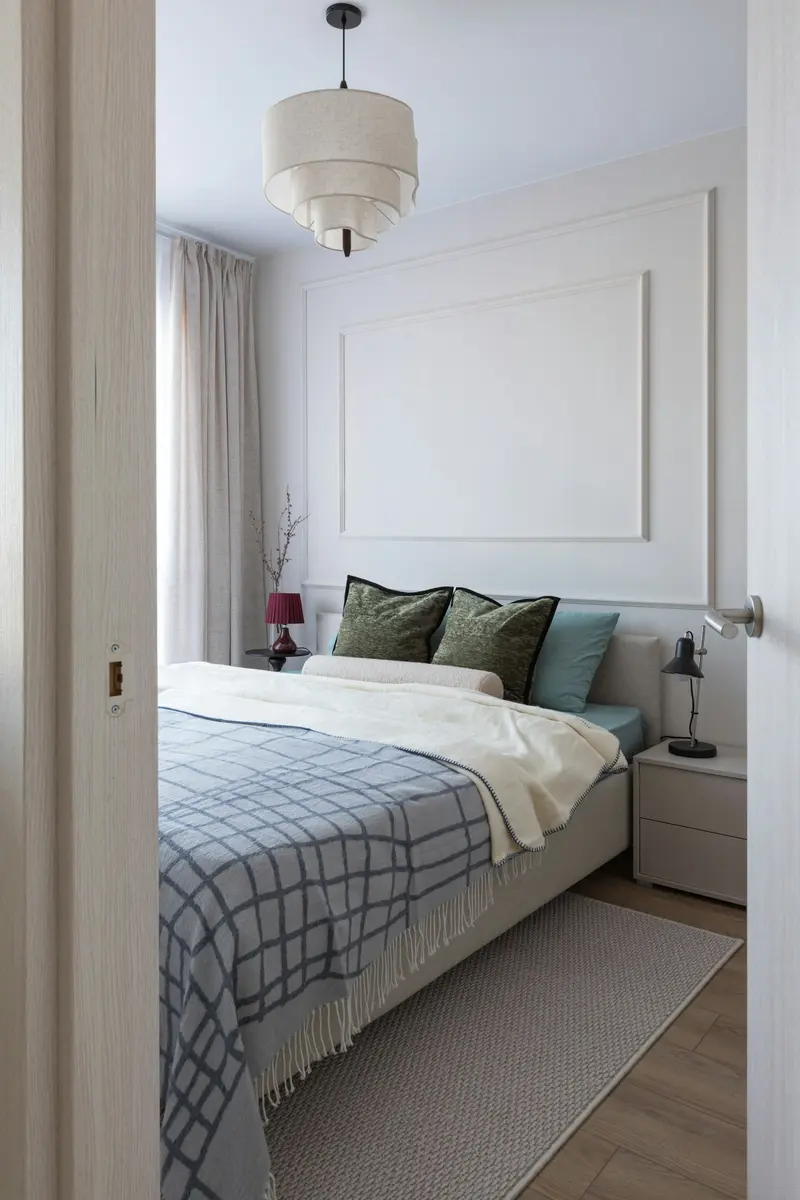
Choose blackout curtains when the room needs to be properly dark. Bedrooms are the obvious case, especially with early sunrise for much of the year and street or building lights outside. Media rooms, nurseries and the bedroom of anyone who works nights benefit too.
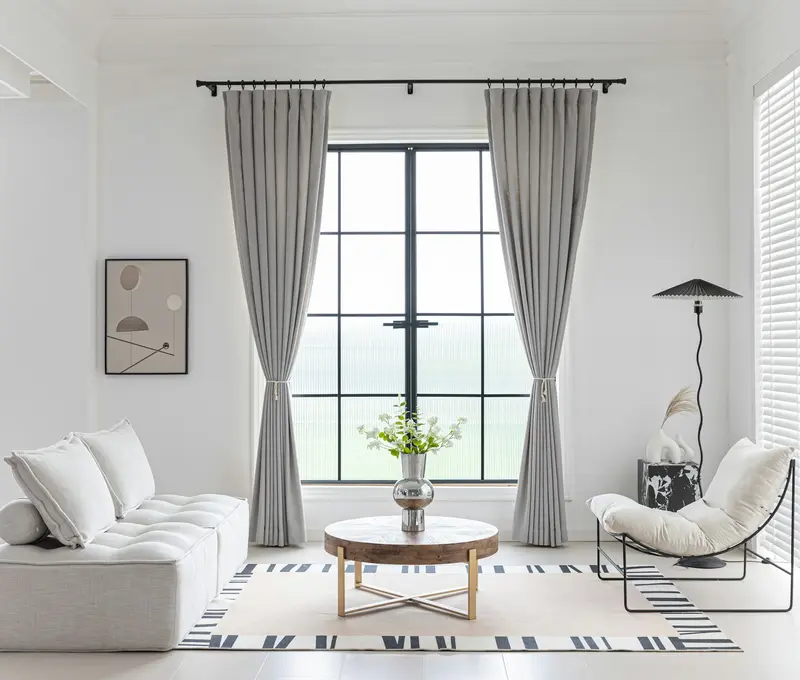
Blackout can be a fabric with the light-blocking layer built in, or a decorative fabric sewn onto a separate blackout lining. Lining gives you more choice of colour and texture, and adds weight so the curtain hangs well. Either way, light gets round the edges if the track is short or the hem stops at the sill, so fit matters as much as fabric.
On their own, blackout curtains have one drawback: they are either open or closed. Closed during the day, the room goes dark. Open, you lose privacy and let the full sun in.
When are layered curtains worth it?
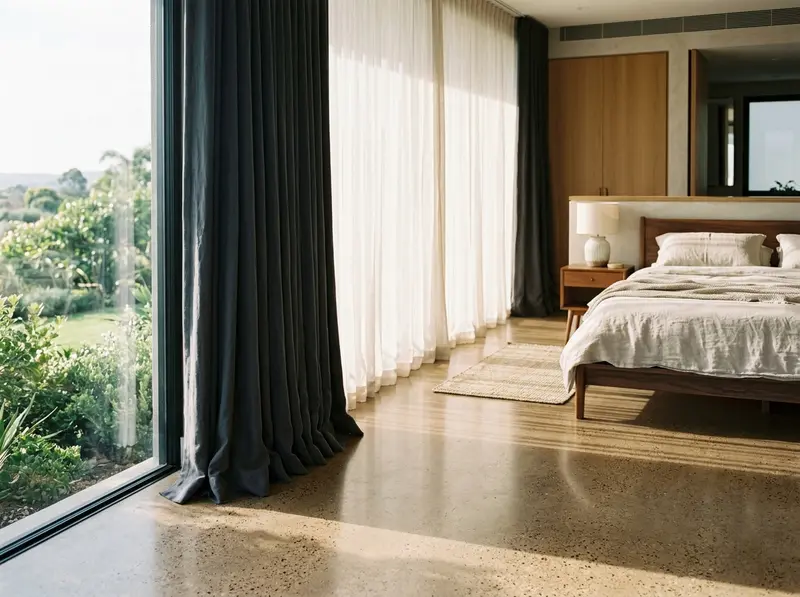
Layered curtains are worth it whenever a room needs both daytime privacy and night-time darkness. With a sheer and a blackout on a double track, you can open both for full light, close the sheer for a bright but private room, or close both for darkness. Each layer moves on its own.
This is why layered is the most popular combination for bedrooms in Dubai. It also works well in west-facing living rooms, where the sheer handles everyday glare and the lined curtain comes across during the hottest hours of the afternoon.
The trade-offs are cost, because you are buying two curtains, and depth, because a double track sits a little further out from the window. On most windows neither is a problem, and the consultant will check the space on the home visit.
Which option suits each room?
As a starting point, match the curtain to how you use the room after dark and in the afternoon sun.
- Master bedroom: layered, so you get a bright, private room by day and darkness at night.
- Children's rooms and nurseries: blackout or layered, for daytime naps.
- Living room: sheer, or layered if it faces west or is overlooked at night.
- Dining room and kitchen: sheer is usually enough.
- Media room or home cinema: blackout.
- Guest room: blackout keeps it simple; layered if guests stay often.
How do the prices compare?
Sheer is usually the most affordable, blackout costs more because of the lining, and layered costs the most because it is two curtains on a double track. As a guide, for a 300 × 300 cm window, installed and including VAT, an American pleat sheer is AED 760, an American pleat blackout is AED 1,160 and an American pleat layered setup is AED 1,680.
In a wave heading the same window is AED 1,010 for sheer, AED 1,550 for blackout and AED 2,230 for layered. Tracks and installation are included in every price. For your own window sizes, the instant online estimate gives a quick figure, and the home visit turns it into one written quotation.
Does the heading style change the choice?
No, the heading changes how the curtain looks, not how much light it lets through. Sheer, blackout and layered curtains are all available in American pleat, with classic pinch-pleated folds, and in wave, with a continuous, even S-fold on a wave track. Eyelet, with metal rings that slide along a rod, is a third heading for sheer and blackout curtains.
Many people choose wave for modern apartments and floor-to-ceiling glass, and American pleat for a more tailored, classic room. Decide the light first, then choose the heading that suits the space.
How do I decide for my home?
The easiest way is to see the fabrics against your own windows. On a free home visit anywhere in Dubai, a consultant brings sheer, blackout and lining samples, measures every window and talks through how each room is used. You get one written quotation with no obligation.
Once you approve it, delivery is estimated at two to four days, and the company's own team installs the curtains and tracks on the day of delivery. If you have a quick question first, you can ask on WhatsApp.
Frequently Asked Questions
Can you see through sheer curtains at night?
Yes, usually. Sheers give good privacy in daylight because outside is brighter than the room, but once your lights are on at night the effect reverses and people can see in. If you are overlooked, add a blackout or lined curtain on a double track.
Are layered curtains worth it in Dubai?
For most bedrooms and sun-facing living rooms, yes. The sheer handles daytime glare and privacy, while the blackout comes across at night or in the hottest hours. Because both run on one double track, you get every setting from a single window.
Do blackout curtains make a room too dark during the day?
They can, if blackout is the only layer. Open, they give full light but no privacy, and closed, the room goes dark. That is the main reason many people in Dubai add a sheer behind them, so there is a bright, private setting in between.
How much more do layered curtains cost than sheer or blackout?
Layered costs more because it is two curtains on a double track. As a guide for a 300 × 300 cm window, installed with VAT, American pleat layered is AED 1,680, compared with AED 760 for sheer and AED 1,160 for blackout.